
The various forms of media below will share insights and ideas gleaned from a number of different recorded events. Enjoy!

|
Eight Communication Principles that Every Leaders Must Master in 2020
Some conversations are simply difficult to hold—either we avoid them altogether, or our best attempts leave much to be desired. Most of us struggle to talk about what matters most. We engage in “fake talk”—all kinds of verbal noise that fails to achieve results, create respect, and build the relationships that we desire. Fill out your information below to receive a link to the webinar. In order to achieve all that we want through conversation, we need to learn to hold REAL conversations. REAL Conversations are created by applying nine specific principles that impact every conversation that we hold: awareness, knowledge, reflection, perception, preparation, expression, discovery, connection,and creation. Whether we are consciously aware of these principles or not, they influence every conversation we hold and they can be learned, understood, and applied to the most difficult conversations that confront us. Everyone can learn to talk about any topic, with anyone, at anytime. |
|
| View | ||

|
Creating Connections and Personal Engagement for Results
Obviously, no one intends to ruin the conversations or the relationships they are involved in! However, sometimes the way we speak and interact with others becomes a barrier when we need to talk about what matters most. During today’s challenging times, we can ill afford to unintentionally offend others. When a conversation begins to go awry, most individuals are challenged to speak up because of what they perceive the negative impact may be to them. Additionally, we sometimes have a hard time talking to certain people. Because we are all uniquely different, our communication style may be offensive to others or their style may offend us. Even though we don’t intend to offend others, the way in which we think, communicate, and behave may be interpreted negatively. Our individual differences show up in a display of different “Interaction” styles that are often different from the styles of others. Understanding the differences in individual styles allows us to “match” others’ styles and then to connect and increase personal engagement in a way that enhances mutual understanding and respect. |
|
| View | ||

|
Why Don't Your Conversations Work?
Seven Barriers to Effective Communication Are your conversations achieving the results that you really want? Do you know how to create respect and build relationships while holding any difficult conversation? Many protest that the communications training they have received still doesn't improve the quality of their conversations. Perhaps this is because they don’t understand the conservational dynamics--outside of the words we use--that impact communication. The focus is then only on 7% of the conversation, and we leave the other 93% to chance. Seven specific barriers impact the effectiveness of your conversations. These barriers hinder your ability to connect and engage with others, clearly express a powerful message, increase collaboration and teamwork, and reach the goals that are so vital to your success. |
|
| Become a Member | ||

|
Are Emotions Derailing Your Results?
Because our results are impacted by our ability to communicate, to engage, and to collaborate with others, our inability to understand and manage our and others’ emotional reactions can get in the way of accomplishing our goals, making decisions, and solving problems. Sometimes the way we deal with “hot” or negative emotion keeps us from achieving what we really want! This webinar will help you to understand the source of emotional reactions and how to defuse those reactions to achieve more significant results. |
|
| Become a Member | ||

|
The Ego Has Landed: Part 1
Introduction to The Ego Has Landed Often our ego gets in the way of how we communicate and deal with others because we become defensive. When people become defensive, their capacity to work effectively is diminished. Recognizing and managing the ego is the key to organizational and personal effectiveness. |
|
| Become a Member | ||
|
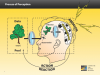
The Ego Has Landed: Part 2
The Impact of Thinking on Results The process of our own perception impacts the way in which we speak and deal with others. The lens of our perception creates the mental models through which we see, interpret, and assign meaning to our own reality. Understanding our thinking is the key to understanding how we create our results. |
|
| Become a Member | ||
|
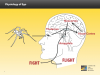
The Ego Has Landed: Part 3
The Physiology of Ego The reptilian brain serves as the protective-reactive mechanism of the brain and insures our survival. The physiology of this brain function contributes to the activation of the ego and produces emotional reaction. Being able to recognize these reactions is the key to defusing emotion or defensiveness. |
|
| Become a Member | ||

|
The Ego Has Landed: Part 4
The Low Road of Thinking Our thinking doesn’t do us any favors. There is a high road and low road to our thinking. Recognizing the flaws in our thinking or “brain traps” helps us recognize when we need to slow down and assess the accuracy of our thinking. Emotional or reactive thinking is devoid of rationality. |
|
| Become a Member | ||
|
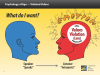
The Ego Has Landed: Part 5
The Psychology of Ego We interpret the events that we observe as a violation of our values or expectations. Negative or “hot” emotion signals violated values. Such emotion represents the psychology behind our thinking that can be identified and challenged in order to assess and restore our rationality. |
|
| Become a Member | ||
|
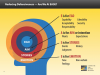
The Ego Has Landed: Part 6
Defusing Defensiveness It is easy to defuse defensiveness by applying the EASE model. Being able to defuse emotional reaction is the key to increasing our understanding of the meaning that is hidden or masked by our emotions. |
|
| Become a Member | ||
|
The Ego Has Landed: Part 7
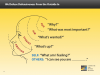
Using the EASE Model Using the questions identified in the EASE model helps individuals to literally shift their thinking from protective-reactive mode to cognitive-rational mode. In the process of doing so, individuals become more clear as to the values that they perceived to have been violated. |
|
| Become a Member | ||

|
The Ego Has Landed: Part 8
Conclusion This segment emphasizes the importance of recognizing our ego and how it gets in the way of creating the results we want. In essence, we suggest that individuals learn to “Ego Off!” The segment also summarizes the principles from the entire program. |
|
| Become a Member | ||